Check My Credit Score
A practical step-by-step guide to check my credit score, including preparation, instructions, common issues, tips, and next steps.
Check My Credit Score
Your credit score is a key number that lenders use to decide if they should offer you a loan, mortgage, or credit card. Understanding and checking it is the first step towards improving your financial health. This guide provides clear, practical steps to check your credit score and report for free from the UK's main credit reference agencies. Following these instructions will help you see what lenders see, spot any errors, and take control of your credit history without damaging your score.
Fast Answer
- Where to check: Use free online services linked to the three main UK credit agencies (Experian, Equifax, TransUnion).
- Does it cost?: No, you have a legal right to see your credit report for free.
- Does it harm your score?: No, checking your own score is a "soft search" and has no impact.
Before You Start
Checking your credit score is a straightforward online process. To make it as smooth as possible, it helps to have some key information ready. The credit agencies need this to confirm you are who you say you are and to show you the correct information.
What You Need
- Personal Details: Your full legal name and your date of birth.
- Address History: You will need to provide all your UK addresses from the last six years. Make sure you have the postcodes correct.
- Email Address: A valid and accessible email address for creating an account and receiving confirmations.
- Financial Details (for verification): You may be asked for details from a UK bank account, credit card, or mortgage to prove your identity. This is a standard security step and is not for payment on free services.
Safety and Context
It's important to understand what you're looking at. Your "credit score" is a single number that summarises your history. Your "credit report" is the detailed document that shows the history itself, including all your accounts, payment records, and more. Lenders pay more attention to the report than the score, and so should you.
How to Check Your Credit Score: Step-by-Step Instructions
Follow these steps to access your credit information safely and effectively from the main sources in the UK.
Choose Which Credit Reference Agency to Check
In the UK, there are three main Credit Reference Agencies (CRAs): Experian, Equifax, and TransUnion. Lenders don't always use all three; some might only check your file with one or two of them. Because each agency can hold slightly different information and calculates your score in a different way, your score will likely vary between them. This is completely normal.
For a complete picture of your credit health, it's a good idea to check your report with all three agencies. You don't have to do it all on the same day, but checking each one at least once a year is a wise strategy, especially if you plan to apply for a mortgage or a large loan.
Find a Free Service to Access Your Report
You have a legal right to view the information held on you by each agency for free. This is called a Statutory Credit Report. While you can apply for this directly (often by post), a more convenient method is to use one of the many free-for-life online services. These services provide ongoing access to your score and report, which is often updated monthly.
Some popular free services are directly partnered with the main CRAs:
- To see your Equifax report, you can use services like ClearScore.
- To see your TransUnion report, you can use services like Credit Karma.
- To see your Experian report, you can use Experian's own free service.
Provide Your Personal Information Securely
Once you've chosen a service, you'll need to create an account. This involves providing the personal details you gathered earlier. Be prepared to enter:
- Your full name, including any middle names.
- Your date of birth.
- Your current address and all previous addresses covering the last six years.
This information is crucial for the agency to accurately locate your credit file. If you have a common name or have moved frequently, providing a full address history is the best way to ensure they find the right records. All reputable services use secure connections to protect your data during this process.
Complete the Identity Verification Process
To protect your privacy and prevent fraud, you must prove you are who you say you are. After entering your personal details, you'll face a short security quiz. The questions are based on information from your credit file that only you should know.
Examples include:
- "Which of these lenders have you had a mobile phone contract with?"
- "In which year did you open your mortgage with [Bank Name]?"
- "What is the credit limit on your [Credit Card Provider] card?"
You'll be given multiple-choice answers. Don't worry if you're unsure about one; there are usually several questions. Some services may also verify you by asking for your bank account or credit card details, cross-referencing them to confirm your identity.
Access and Understand Your Credit Score and Report
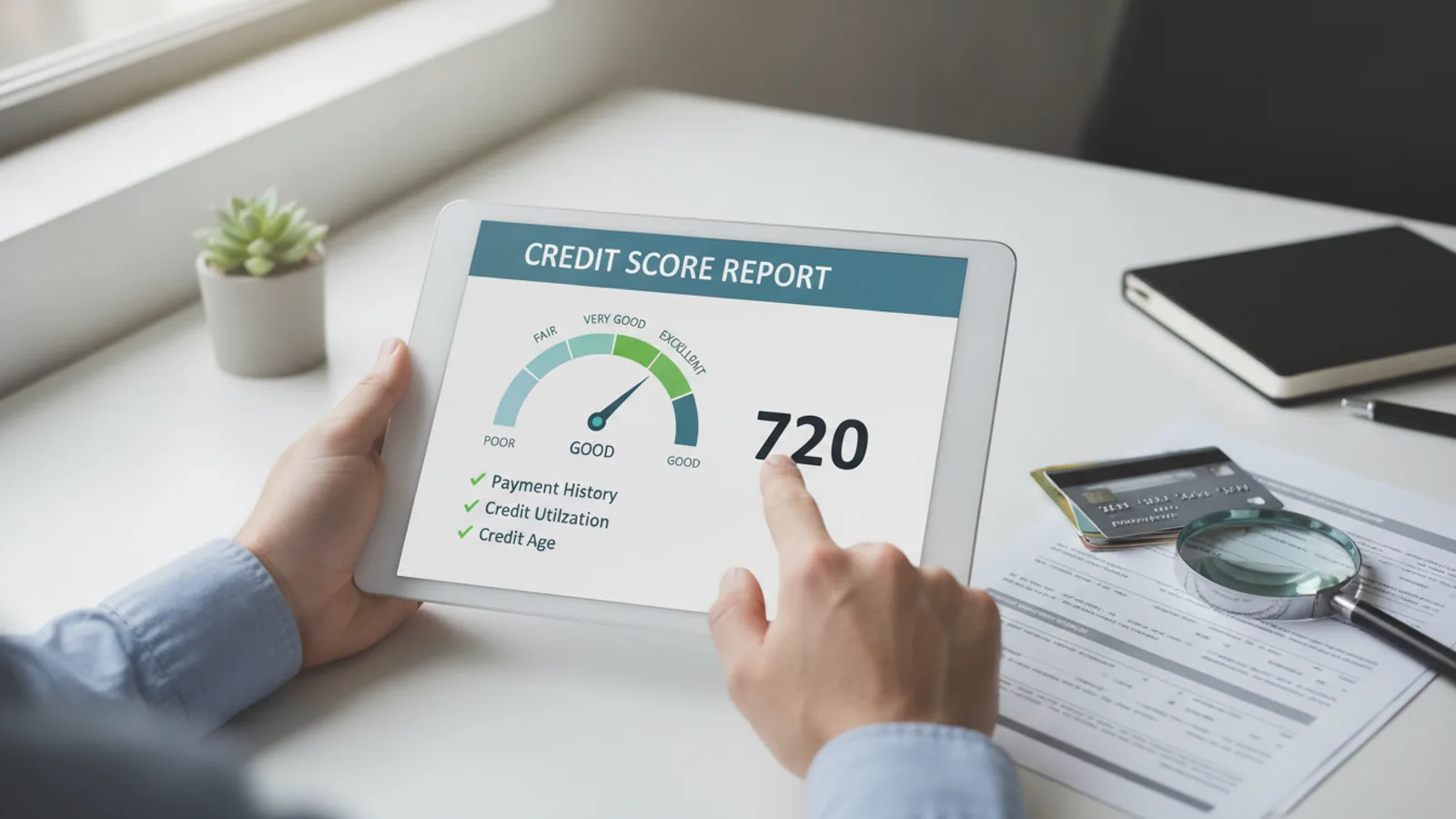
Once your identity is verified, you'll get instant access to your credit dashboard. You'll immediately see your credit score, often presented as a large number within a coloured gauge. The service will also categorise it for you (e.g., 'Excellent', 'Good', 'Fair', 'Poor').
While the score is a useful snapshot, the most valuable tool is your full credit report. Look for a link or tab labelled "Report". This section breaks down your entire credit history, including:
- Personal Information: Your name, address, and date of birth as recorded.
- Credit Accounts: A list of your mortgages, loans, credit cards, and some household bills (like mobile phone contracts). It will show the lender, opening date, current balance, and credit limit.
- Payment History: A record of your payments for the last few years on each account. It will show if payments were on time, late, or missed.
- Credit Searches: A list of who has looked at your file. You'll see "hard searches" (from credit applications) and "soft searches" (from you checking your own file or from companies checking eligibility).
- Public Records: Details of any court judgments (CCJs), bankruptcies, or IVAs. It will also show if you are registered on the electoral roll at your current address.
Carefully Check Your Report for Errors
Mistakes on your credit report are more common than you might think, and they can seriously damage your score. Go through every section of your report with a fine-tooth comb. Pay close attention to:
- Incorrect personal details: A misspelled name or a wrong address can cause issues.
- Accounts you don't recognise: This could be a sign of administrative error or, in a worst-case scenario, identity fraud.
- Inaccurate account information: Check that closed accounts are marked as 'closed' or 'settled'. Ensure credit limits and balances are correct.
- Mistaken late payments: If you're certain you paid on time, but the report shows a late payment, it's worth investigating.
- Old financial links: If you had a joint account with an ex-partner, they might still be listed as a 'financial association'. If you no longer share finances, you should have this link removed.
If you find an error, you have a legal right to have it corrected. Each CRA has a dispute process on its website. You can raise a query to have the incorrect information investigated and, if upheld, removed or amended.
Common Problems When You Check Your Credit Score
I failed the identity verification checks.
This can be frustrating but usually has a simple cause. It might happen if you've moved house very recently, you're not on the electoral roll, or you have a "thin" credit file with very little history. Try checking with another agency, as they may hold different information to verify you against. If you still can't get through, you can always fall back on applying for your free Statutory Report by post, which allows you to send copies of documents to prove your identity.
My credit score is different with each agency.
This is normal and expected. Each of the three CRAs uses its own unique algorithm to calculate your score. They also receive information from lenders at slightly different times. Focus less on the exact number and more on the general rating (e.g., 'Good', 'Fair') and, most importantly, on the details within the underlying report. As long as the report details are accurate across all three, you are in a good position.
I found a mistake on my credit report.
If you spot an error, your first step is to contact the credit reference agency that is showing the incorrect information. They all have an online process for raising a dispute. You should explain what you believe is wrong and provide any evidence you have. The CRA will then contact the lender who supplied the information to investigate. This can take up to 28 days. If they agree it's an error, they will update your file.
Advanced Tips for Your Credit Score
Set Up Monitoring and Alerts
Most free online credit report services offer free email alerts. It is highly recommended that you turn these on. They will notify you if there are any significant changes to your file, such as a new account being opened or a hard search being recorded. This is one of the quickest ways to spot potential identity fraud early.
Understand Soft vs. Hard Searches
When you check your own credit file, it's a soft search. Only you can see these, and they have zero impact on your credit score. When you formally apply for credit (like a loan or credit card), the lender performs a hard search. These are visible to other lenders and many hard searches in a short period can temporarily lower your score, as it can look like you are desperate for credit. Always use eligibility checkers (which use soft searches) before you apply formally.
Check and Correct Your Financial Associations
If you've ever had a joint financial product with someone, like a joint mortgage or bank account, your credit files become linked. This means their financial behaviour could impact your ability to get credit. If you've separated from that person and no longer share any finances, you can ask the credit agencies for a 'financial disassociation' to break that link.
Quick Reference
| Situation | Use this | Why |
|---|---|---|
| I'm applying for a mortgage soon. | Check your reports from all three agencies. | Mortgage lenders are very thorough, and you need to ensure the data is accurate everywhere they might look. |
| I think there's an error on my file. | The CRA's official online dispute process. | It's your legal right to have inaccurate information investigated and corrected. |
| I just want to keep an eye on my score. | A free-for-life app or website. | They provide easy, regular access and alerts for changes, helping you stay informed. |
| I'm worried about identity fraud. | Enable free monitoring alerts with your service. | You'll be notified quickly of new searches or accounts, allowing you to act fast if something is wrong. |
Check My Credit Score FAQ
How often should I check my credit score?
It's good practice to check your credit reports at least once a year. If you're actively trying to improve your score or are planning to apply for a major credit product like a mortgage, checking every few months is a sensible approach. Most free online services update your information monthly, so you can check as often as you like without any harm.
Will checking my credit score lower it?
Absolutely not. When you check your own score or report, it is recorded as a 'soft search' or 'personal search'. These are only visible to you and have no impact whatsoever on your credit score. Lenders cannot see how many times you have checked your own file.
What is a "good" credit score in the UK?
There is no single "universal" credit score. Each agency has a different scoring range. For example, Experian is out of 999, while TransUnion is out of 710. Generally, a higher number is better. Instead of fixating on the exact number, pay attention to the category the agency places you in (e.g., Good, Fair, Excellent). This category is a much better indicator of how lenders will view you.
Why can't I find my credit score?
This usually happens if you have a 'thin' credit file. This is common for young adults who have never borrowed money, or for people who are new to the UK. Without a history of borrowing and repaying money, the agencies don't have enough data to generate a score. The solution is to start building a credit history, for example by getting on the electoral roll, getting a mobile phone contract in your name, or using a credit-builder credit card responsibly.
Are free credit score services really free?
Yes, the reputable ones are genuinely free for you to use. They make their money through commission if you take out one of the credit cards or loans that they show you in personalised offers. You are under no obligation to ever apply for these products, and you can continue to use the service to check your score and report for free forever, even if you never take out an offer.
Final Checklist for checking your credit score
Use this checklist to make sure you've covered all the important bases in understanding your credit standing.
- You have gathered your personal details, including address history for the last 6 years.
- You have located a free service for each of the three main CRAs: Experian, Equifax, and TransUnion.
- You have successfully passed the identity checks and can access your dashboard.
- You have reviewed not just the score, but the detailed information in your full credit report.
- You have carefully checked for any errors in your accounts, payment history, or personal information.
- You have raised a dispute for any inaccurate information you found.
- You understand that checking your score is a 'soft search' that does not harm it.
- You have enabled free alerts to monitor your credit file for any future changes.