How To Check My Credit Score
A practical step-by-step guide to how to check my credit score, including preparation, instructions, common issues, tips, and next steps.

How To Check My Credit Score
Checking your credit score is a crucial step in managing your financial health. This guide provides clear, practical instructions on how to access your credit score and full credit report for free from the UK's main credit reference agencies. Understanding your report helps you spot errors, protect yourself from fraud, and see what lenders see before you apply for important credit like a mortgage, loan, or credit card.
Fast Answer
- Where to check: Use a free service like ClearScore (Equifax), Credit Karma (TransUnion), or Experian's free account.
- What you get: Your credit score and a detailed credit report.
- Cost: £0. Reputable services are permanently free.
Before You Start
To check your credit score, the provider needs to confirm you are who you say you are. Having the right information to hand will make the process quick and smooth. You will need:
- Your full name and date of birth.
- Your current address and postcode.
- Your address history for the past 3 to 6 years.
- A valid email address to create your account.
- Access to details of your financial accounts (like your bank, credit card, or mortgage provider) to answer security questions.
Step-by-Step Instructions
Choose a Credit Reference Agency Service
In the UK, there are three main Credit Reference Agencies (CRAs): Experian, Equifax, and TransUnion. Lenders use the information these agencies hold to help decide whether to lend to you. Each agency calculates your score differently, so your score will vary between them. It’s a good idea to check your report with more than one, but starting with one is fine.
You can access your data from each agency for free through these popular services:
- To see your Equifax report, you can use a service like ClearScore.
- To see your TransUnion report, you can use a service like Credit Karma.
- To see your Experian report, you can sign up for a free Experian account directly on their website.
All these services are genuinely free and provide ongoing access to your score and report. They make money by showing you offers for financial products, but you are under no obligation to use them.
Create Your Free Account
Navigate to the website of the service you have chosen. Look for a button that says "Sign Up Free," "Get Started," or "Check My Score." You will be asked to enter your email address and create a secure password. Make sure your password is strong and unique to protect your sensitive financial data.
Provide Your Personal Details
The next step is to fill in your personal information. This includes your full legal name, date of birth, and current address. You will also need to provide your address history for at least the last three years. This information is essential for the CRA to find your unique credit file among millions of others and ensure they are showing you the correct data.
Be as accurate as possible. A simple typo in your name or a wrong postcode could prevent the system from finding your file or lead to a failed identity check.
Complete the Identity Verification
This is the most important security step. To protect your data, the service must confirm your identity. This is usually done by asking you a series of multiple-choice questions based on the information in your credit file. For example:
- "With which of these providers did you open a current account in 2019?"
- "How much is the monthly payment for your mortgage with [Lender Name]?"
- "Which of these addresses have you previously been registered at?"
Take your time and answer carefully. If you don't recognise any of the options, there will usually be a "None of the above" choice. If you fail the verification, don't worry. The service will typically offer an alternative way to prove your identity, which might involve providing details from a passport or driving licence, or connecting to your bank via Open Banking.
View Your Credit Score
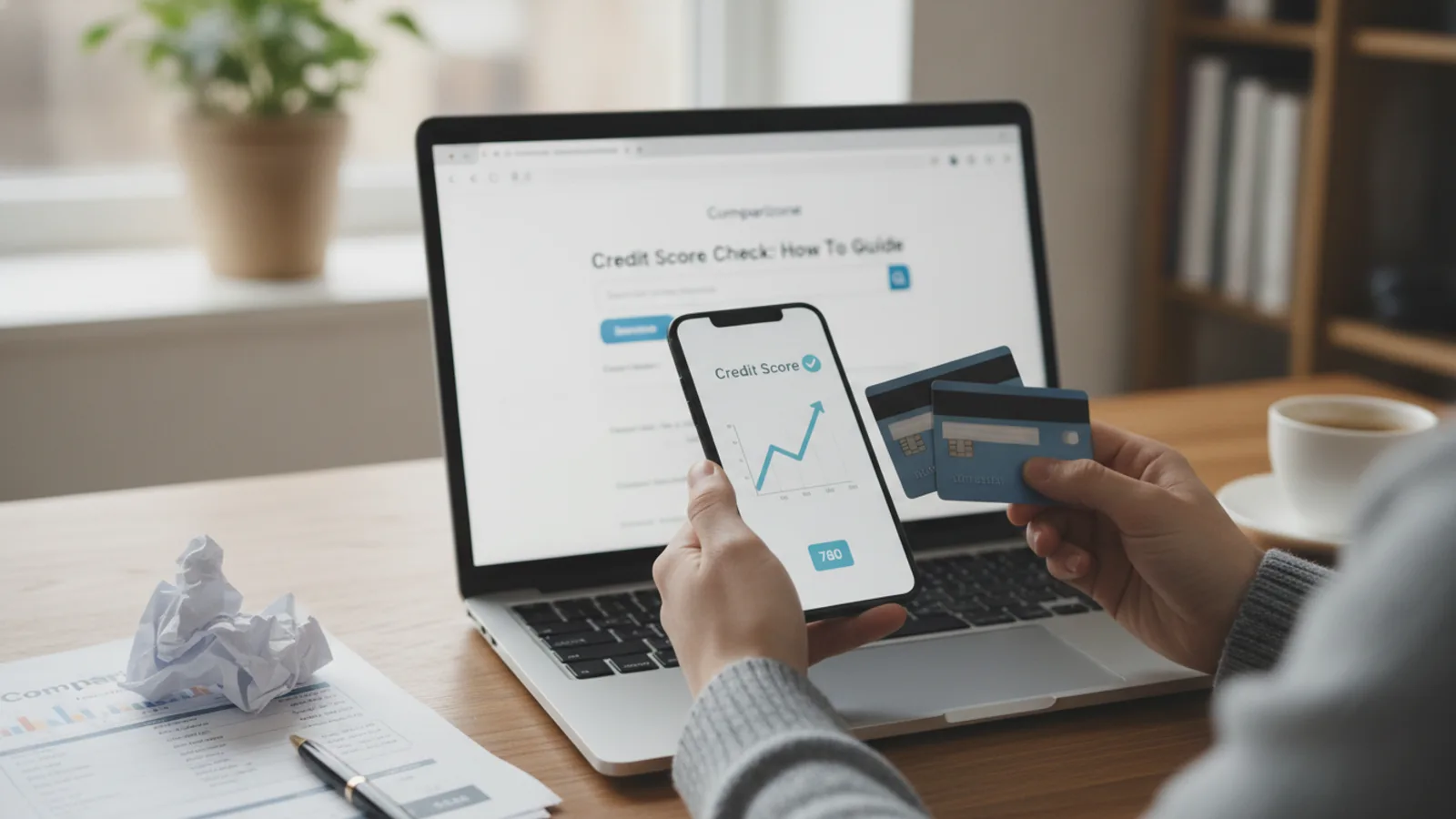
Once your identity is confirmed, you'll be taken to your dashboard, where your credit score will be prominently displayed. Remember that the score itself is just a number; what matters more are the details behind it. Each agency uses a different scoring range:
- Experian: 0-999
- Equifax: 0-1000
- TransUnion: 0-710
The dashboard will also likely show you a rating, such as "Excellent," "Good," "Fair," or "Needs Improvement." This gives you a quick idea of where you stand, but the real insights are in the full report.
Analyse Your Full Credit Report
Look for a link or tab labelled "Report," "Full Report," or "Credit History." This is the most valuable part of the service. Go through each section carefully. A typical report includes:
- Personal Details: Check your name, address, and date of birth are all correct.
- Credit Accounts: This lists all your credit agreements, such as mortgages, loans, credit cards, mobile phone contracts, and some utility bills. Check that you recognise all accounts, the balances are correct, and the payment history is accurate. Late payments will be clearly marked.
- Searches: You'll see a list of "hard" and "soft" searches. A soft search (like this check) is only visible to you and doesn't affect your score. A hard search happens when you apply for credit and is visible to other lenders. Too many hard searches in a short period can lower your score.
- Financial Associations: This shows people you have a joint financial product with, like a joint mortgage. Their financial habits can affect your ability to get credit.
- Public Records: This section lists any County Court Judgements (CCJs), insolvencies, or bankruptcies. These have a severe negative impact on your score.
Check for Errors and Raise a Dispute If Necessary
Mistakes on credit reports can and do happen. You might find an account you don't recognise, a payment marked as late when it was on time, or an incorrect address. If you find something that you believe is an error, you have a legal right to challenge it.
Every CRA has a formal dispute process. On the service's website or app, look for a "Raise a correction," "Dispute," or "Help" section. You can submit the details of the error online. The CRA will then investigate with the lender who provided the information, which can take up to 28 days. If they agree it's a mistake, your report will be corrected.
Set Up Monitoring and Regular Alerts
One of the best features of free credit score services is ongoing monitoring. Make sure you have email or app notifications enabled. The service will alert you to any significant changes on your report, such as:
- A new credit search has been performed.
- A new account has been opened in your name.
- A late payment has been reported by a lender.
- A change of address has been recorded.
These alerts are one of your best defences against identity fraud. If you receive an alert about an application you didn't make, you can act immediately to protect yourself.
Quick Reference
| Situation | Use this | Why |
|---|---|---|
| I want the score used by the most lenders. | Experian | Experian is the largest CRA in the UK and its data is used by a wide range of major banks and lenders. |
| I've found an error on my report. | The dispute process on the CRA's website. | This is the official, legal channel to have incorrect information investigated and removed from your file. |
| I'm worried about identity theft. | Enable monitoring alerts. | You'll be notified of new activity on your file, allowing you to spot and report fraudulent applications quickly. |
| My score seems low and I want to improve it. | The "Score analysis" or "Factors" section. | This breaks down what is positively and negatively affecting your score, giving you a clear list of things to work on. |
Common Problems When You Check My Credit Score
- Problem: The system can't find or verify me.
This often happens to people who have recently moved, have not been on the electoral roll, or have a "thin" credit file with very few credit accounts. If the online questions fail, follow the on-screen instructions for manual verification. This usually involves uploading a photo of your ID (like a passport) and proof of address (like a utility bill).
- Problem: My score is different with each agency.
This is completely normal and expected. Each of the three CRAs uses its own secret formula to calculate your score. Lenders may also report data to one agency but not another. The key is to ensure the underlying information (your accounts, payment history) is broadly consistent across all reports. The exact number is less important than the health of the report itself.
- Problem: I don't recognise an account on my report.
First, think carefully. The company name might be a trading name for a larger financial group you do have an account with. If you are certain the account is not yours, it could be an administrative error or a sign of fraud. Contact the lender listed immediately to report it and raise an official dispute with the CRA.
Advanced Tips for How To Check My Credit Score
- Check all three of your reports annually. While checking one service monthly is great, it's wise to pull your report from all three main CRAs at least once a year. This gives you a complete overview, as some lenders only report to one or two agencies. You can do this for free by signing up to a service for each one.
- Add a Notice of Correction. If a past financial difficulty was caused by specific circumstances (e.g., redundancy, illness, or a relationship breakdown), you can add a 200-word explanatory note to your file. While it won't change your score, lenders are legally required to read it during a manual review of your application, providing valuable context.
- Check for and remove old financial associations. If you previously had a joint account with an ex-partner, their credit behaviour could still be linked to yours. You need to formally request a "financial disassociation" from the CRAs to sever this link, once all joint accounts are closed or transferred.
How To Check My Credit Score FAQ
How often should I check my credit score?
It's good practice to check your credit score at least once a month. The free online services update monthly, so this frequency keeps you fully informed of any changes. You should always check it a few months before you plan to make a major credit application, such as for a mortgage.
Will checking my credit score lower it?
No. When you check your own credit score, it is recorded as a "soft search" or "soft inquiry." These searches are only visible to you and are not seen by lenders. They have absolutely no impact on your credit score. A "hard search," which can slightly lower your score temporarily, only occurs when you formally apply for a credit product.
Is it really free to check my credit score?
Yes. By law, you are entitled to a free statutory report, but this is basic and slow to arrive. Services like ClearScore, Credit Karma, and Experian's free account offer a much better, user-friendly experience that is permanently free. They make money by earning a commission from lenders if you choose to take out one of the loans or credit cards offered to you on their platform. There is no obligation to apply for anything.
What is a "good" credit score?
This varies as each agency has a different scale. As a general guide: For Experian (out of 999), 881-960 is considered "Good" and 961-999 is "Excellent." For Equifax (out of 1000), 531-670 is "Fair" and 671-810 is "Good." For TransUnion (out of 710), 604-627 is "Good" and 628-710 is "Excellent." Lenders also have their own criteria, so a high score is not a guarantee of acceptance.
Final Checklist for How To Check My Credit Score
- Choose a reputable free service for Experian, Equifax, or TransUnion.
- Gather your personal details including address history before you start.
- Complete the secure identity verification process carefully.
- Review your score and rating, but focus on the details in the full report.
- Scrutinise every account and payment history for accuracy.
- Check for unrecognised searches or incorrect personal information.
- Raise an official dispute with the CRA to correct any errors you find.
- Enable monitoring alerts to protect your account and be notified of future changes.